

Graduate Programs: Economic Theory and Policy
A Main Stream Alternative
The Levy Economics Institute Graduate Programs in Economic Theory and Policy were created to offer students an alternative to mainstream graduate programs in economics and finance. The Institute is well known for its work in macroeconomic theory and policy analysis, the development and exploration of alternative measures of economic well-being and income and time poverty, and its continuing efforts to extend the work of Distinguished Scholars Minsky and Godley.
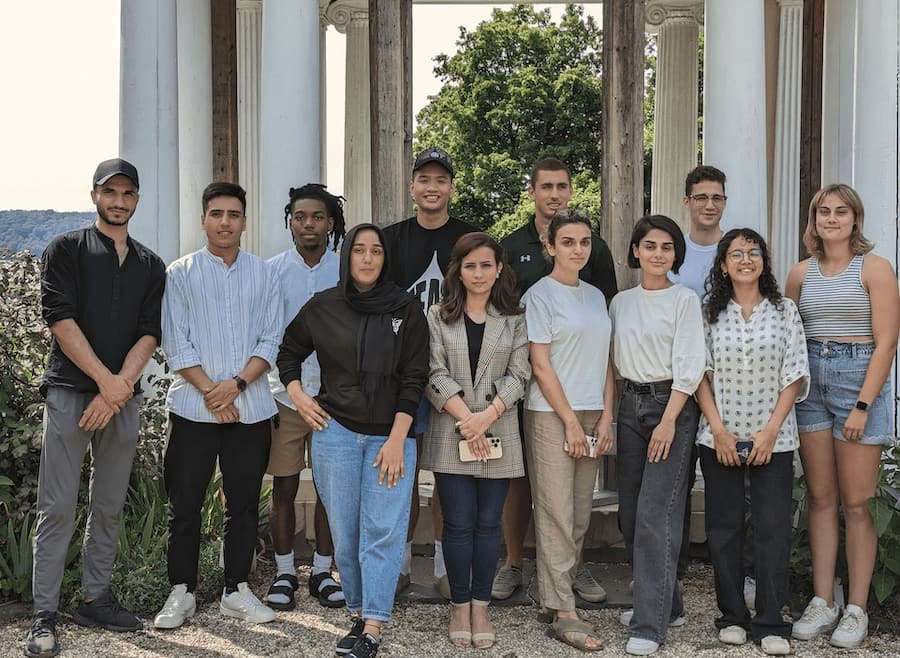
About Our Programs
Our one-year MA and two-year MS programs provide instruction grounded in the innovative approaches to financial instability developed by Levy Institute Distinguished Scholar Hyman P. Minsky and the stock-flow modeling method created by Distinguished Scholar Wynne Godley, as well as more than 30 years’ experience in the measurement and understanding of income and wealth inequality.
Five Key Areas of Research
The State of the US and World Economies
This program is based on the extension of Wynne Godley’s pathbreaking work in stock-flow consistent modeling as implemented in the Levy Institute’s strategic analyses of the United States, eurozone, and world economies. The Institute’s proprietary macro models are used to project and analyze outcomes of alternative forward-looking scenarios. The results are published in the Institute’s Strategic Analysis series and provide policymakers with an understanding of the implications of various policy options.
Core Team: Dimitri B. Papadimitriou, Giuliano Toshiro Yajima, and Gennaro Zezza
Economic Policy for the 21st Century
Levy Institute research often goes beyond economic analysis of pressing economic challenges to develop actionable strategies for policymakers.
This program examines the historical foundations of economic policy and the legal and institutional architecture that shapes policy implementation while also exploring specific subject areas, including Social Security, climate, and healthcare.
Core Team: Juan Matias De Lucchi, Izaura Solipa, Pavlina R. Tcherneva, and L. Randall Wray
Monetary Theory and Financial Structure
This program explores the evolution of the structure of financial markets and the institutions operating in them. Research builds on the
work of Hyman P. Minsky—notably, his financial instability hypothesis and his work on regulatory and institutional reforms to increase
financial stability. Research also examines the development and policy implications of modern monetary theory for fiscal policy. It analyzes the
distributional effects of monetary policy, central banking, and structural issues related to the European Monetary Union, and the role of finance
in business investment.
Core Team: Juan Matias De Lucchi, Dimitri B. Papadimitriou, Izaura Solipa, Pavlina R. Tcherneva, and L. Randall Wray
Distribution of Income, Wealth, and Well-Being
This program provides depth to official measures of poverty and the distribution of wealth by exploring other factors that contribute to
economic well-being. Shortcomings in official measures are remedied by developing more comprehensive alternative measures such as the Levy
Institute Measure of Economic Well-Being (LIMEW), which considers not only public consumption and household production but also the
long-run benefits of asset ownership. The Levy Institute Measure of Time and Income Poverty (LIMTIP) integrates both paid and unpaid
work for a more accurate description of the roles of income and time use in measuring poverty, as well as gender inequality with respect to
income and time use. The Levy Institute Macro-Micro Model (LIMM), developed with the Macro-Modeling Team, explores the impact of
social care investments on both macro outcomes and the distribution of employment, income, and time use.
Core Team: Ajit Zacharias and Thomas Masterson
Employment and Labor Markets
This research area encompasses issues surrounding immigration and labor markets, including the implementation of Hyman P. Minsky’s
proposal for an employment guarantee (or job opportunity) program, as well as research into the effects of technology on earnings and trends in
productivity, policies to promote full employment, and the effects of an increase in the minimum wage on hiring practices and earnings.
Core Team: Rania Antonopoulos, Dimitri B. Papadimitriou, Pavlina R. Tcherneva, and L. Randall Wray
Research Resources
Levy Economics Institute Library
The Levy Economics Institute Library contains more than 12,000 volumes covering economics, finance, econometrics, and related subjects. Students also have access, through the Levy Library, to the Connect New York system of interlibrary loans, which makes hundreds of thousands of additional books in academic libraries across New York State automatically available for borrowing. The library also provides access to published articles in virtually every major economic journal through the EconLit, Business Source Premier, and Business and Economics Theory Collection databases. Further coverage of working papers, books, position papers, and articles is provided through subscriptions to the National Bureau of Economic Research and the Social Science Research Network. Additional statistical resources provided by the Levy Economics Institute Library include LexisNexis, the Inter-university Consortium for Political and Social Research, and Historical Statistics of the United States.
Bard College Library
Students also have access to Bard’s College library complex. The resources of the library and the satellite libraries—the Levy Institute’s library and the Center for Curatorial Studies on the Annandale campus, and in the Bard Graduate Center in New York City—include more than 400,000 volumes and 14,000 journals available in print or online. In addition, online databases central to all the disciplines in Bard’s curriculum provide access to indexes and abstracts. Users may consult these and other online resources from the library’s more than 50 computer stations, any public lab, most dormitory rooms, and from off campus anywhere in the world. Further research can be done in the more than 140 additional databases available online on the Bard Library website.
Engaged Learning

Intimate Learning Environment
Small-group interaction in lectures and seminars encourages students to expand their understanding of economic theory and their influence in the global community. Students participate in every discussion and develop close working relationships with faculty in an environment of active learning. Resident scholars teaching in the graduate programs are extremely accessible, and consider themselves mentors as well as teachers.

Extensive Research
A crucial component for both the MS and MA programs is research. In the second year of the MS program, students, working under the close supervision of program faculty, apply their coursework to an active research project. This extensive research training is designed to help candidates hone their skills and deepen their substantive knowledge in one of the five concentrations offered by the program.
For M.A. candidates, it is expected that they will produce a final paper that is an original written work, encompassing their coursework, desk studies, fieldwork (if applicable) and library research.
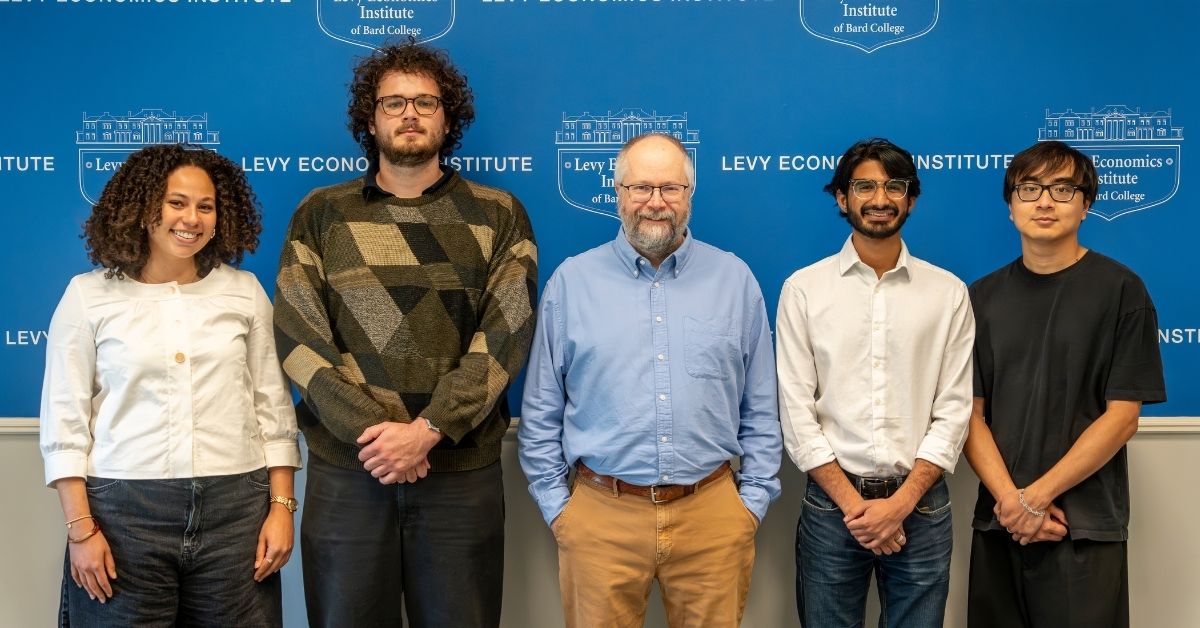
Our Graduates
Our programs prepare graduates for successful careers in the for-profit, nonprofit, and public sectors. Under the Levy Institute’s vast professional network, students are prepared to take on jobs in organizations such as the International Labour Organization, United Nations, International Monetary Fund, World Trade Organization, World Bank, and the US Federal Reserve System.
Alum Spotlight – Brandon Istenes MS’24
Senior Data Analyst working on the property tax policy team at NYC DOF, Tax Policy & Data Analytics division.
After graduating from Levy in ‘24, Brandon launched an independent research blog Rent & Rentier to help explain and visualize the housing crisis. Now, Brandon is about to start a role as Senior Data Analyst in the New York City government.